
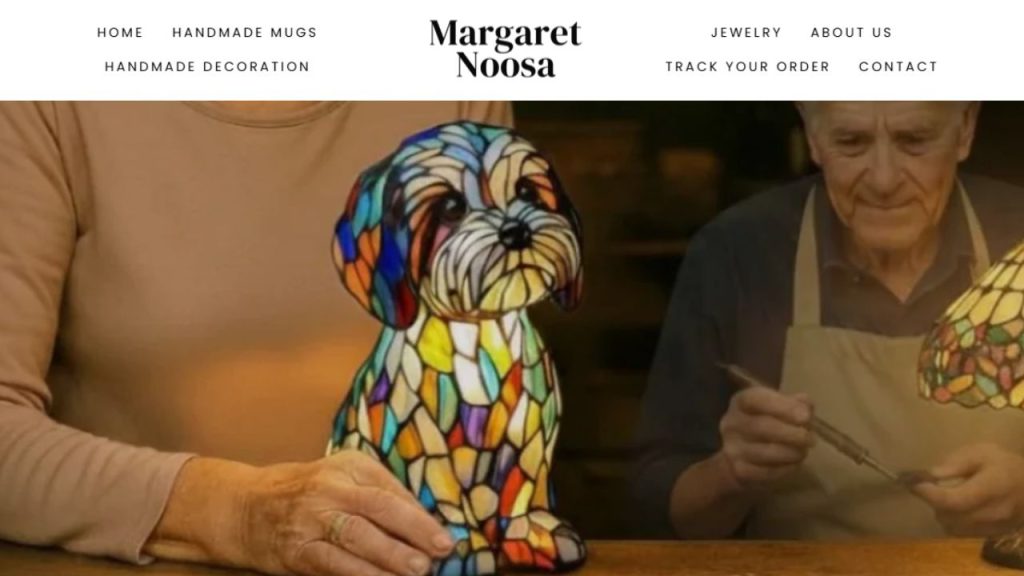
Margaret Noosa is an online home décor store that has been appearing frequently in social media ads and search results.
The brand presents itself as a small, family-run artisan business selling handmade animal lamps, decorative sculptures, mugs, and jewelry.
According to the website’s story, each item is crafted by “Margaret” and her husband in a small workshop, with every piece designed to bring warmth, personality, and meaning into a customer’s home.
At first glance, Margaret Noosa feels heartfelt and authentic.
The branding suggests a charming artisan shop nearing its final days, offering one last opportunity to purchase meaningful, handcrafted décor before the brand disappears forever.
This narrative is emotionally powerful and intentionally comforting.
However, once the claims are examined closely, Margaret Noosa begins to show multiple warning signs commonly associated with misleading online décor stores that rely on storytelling rather than verifiable facts.
🏡 What Margaret Noosa Claims to Be
Margaret Noosa positions itself as a legacy craft brand built on years of handmade artistry. The website describes:
- A small, family-run workshop
- Years of craftsmanship and experience
- Handmade items infused with love and intention
- A permanent farewell sale as the brand “closes its doors”
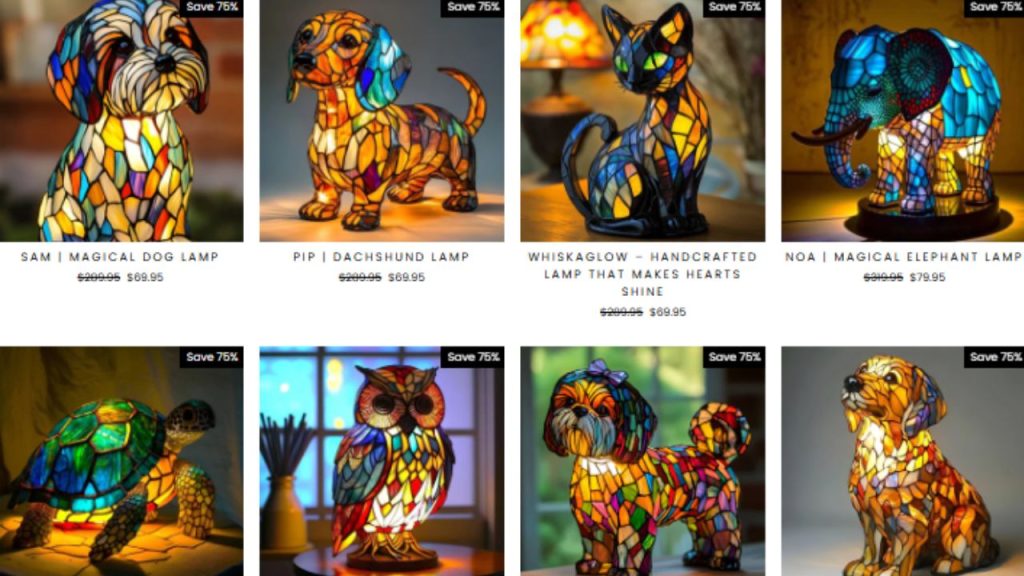
This framing suggests scarcity, history, and authenticity.
Customers are encouraged to believe they are buying more than décor — they are buying a piece of someone’s life work.
The emotional framing is strong, but the supporting evidence is notably weak.
💔 The “Farewell Sale” Narrative
One of the most striking elements of Margaret Noosa is its farewell sale story.
The site claims it is shutting down permanently, offering its “final collection” at deeply discounted prices.
Products once listed near $300 are suddenly reduced to around $70, with discounts frequently reaching 70% to 80%.
This tactic does several things at once:
- Creates emotional urgency
- Encourages impulse buying
- Discourages comparison shopping
- Frames hesitation as missing out forever
While business closures do happen, the way Margaret Noosa presents this farewell raises serious questions.
🚩 Extreme Urgency and Scarcity Tactics
Nearly every product on the website is labeled as “low stock.”
In addition, the site includes messaging stating that if the add-to-cart button is still visible, the product is still available — a subtle way of telling buyers that availability can disappear at any moment.
These tactics are designed to override rational decision-making.
Instead of encouraging shoppers to research, compare, or think carefully, the site pushes immediate action.
This style of urgency is extremely common in short-term online stores and rarely seen in genuine artisan workshops, which typically rely on waitlists, made-to-order systems, or transparent production timelines.
🎭 Emotional Storytelling Without Evidence
Margaret Noosa’s branding relies heavily on emotional language. Phrases like:
- “Our last gift to the world”
- “A lifetime of craftsmanship”
- “Infused with love”
- “One final chapter”
…are used repeatedly throughout the site.
However, emotional storytelling is not proof.
There are no verifiable elements supporting the narrative, such as:
- Photos of a real workshop
- Videos of items being crafted
- Images of Margaret or her husband at work
- Historical product archives
- Social media history documenting the brand’s journey
For a business claiming years of hands-on craftsmanship, the absence of behind-the-scenes evidence is a major concern.
🌐 A Very New Website With an Old Story
One of the strongest red flags appears when examining the website’s age.
The Margaret Noosa domain was registered very recently.
Despite this, the brand claims a long history, deep legacy, and a final farewell after years of operation.
This contradiction is difficult to ignore.
A brand cannot credibly claim a long artisan history while operating on a newly registered website with no traceable past presence.
Established craft brands typically leave digital footprints — old posts, customer photos, press mentions, or archived listings.
Margaret Noosa has none of these.
🏢 No Business Transparency
Another major concern is the complete lack of business transparency.
Margaret Noosa does not provide:
- A registered company name
- A physical business address
- Business registration details
- Names beyond the vague “Margaret”
- Legal identifiers
For a brand asking customers to trust its story, values, and emotional narrative, this absence of basic business information is deeply problematic.
Legitimate artisan businesses typically take pride in their identity.
They are transparent about who they are, where they work, and how customers can contact them beyond a basic support form.
💸 Repeated Pricing Patterns and Anchoring
Nearly every product on Margaret Noosa follows the same pricing structure:
- A very high original price
- A dramatic markdown
- A final price that feels “too good to miss”
This pattern is known as price anchoring.
By showing an inflated original price, the discounted price feels like exceptional value, even if it reflects the item’s true market worth.
When every item follows the same extreme discount model, it strongly suggests the original prices were never real.
This is a common tactic used by mass-market décor stores and dropshipping operations, not by small artisan workshops.
🖼️ Product Imagery and Mass Production Concerns
Another issue arises when closely examining the product images.
Many items appear highly polished and professionally staged, often resembling images found on wholesale décor platforms.
Some animal lamps and sculptures are visually similar to products sold by multiple unrelated online stores.
This raises concerns that the products may be mass-produced items sourced from overseas manufacturers rather than handmade pieces crafted in a small workshop.
While buyers may still receive an item, it may not reflect the uniqueness or craftsmanship implied by the branding.
⚠️ Extended Analysis: Why Artisan Scam-Style Stores Work
Margaret Noosa follows a pattern increasingly seen in misleading décor stores.
1️⃣ Emotional Trust Over Evidence
These stores rely on stories rather than proof.
By creating a relatable human narrative, they bypass skepticism and make buyers feel emotionally invested.
2️⃣ Artificial Scarcity
Claims of low stock, closing sales, and final collections pressure buyers to act quickly before doubts surface.
3️⃣ Price Illusion
High original prices paired with massive discounts create the illusion of luxury and value, even when the product is mass-produced.
4️⃣ No Accountability
Without a registered business or physical address, customers have limited recourse if the product disappoints.
5️⃣ Short-Term Store Lifecycle
Many such stores operate briefly, generate sales, collect reviews internally, then shut down or rebrand under a new name.
📦 What Buyers Are Likely to Experience
Margaret Noosa does not appear to be a site where nothing ships at all. Customers may receive a product.
However, buyers should realistically expect:
- Mass-produced décor rather than handmade items
- Quality that may not match the emotional story
- Limited ability to verify authenticity
- Minimal post-purchase support
The biggest gap is not delivery — it is expectation versus reality.
🧠 Final Assessment: Legit Artisan Brand or High-Risk Store?
Margaret Noosa does not behave like a genuine, long-standing artisan business.
The combination of:
- A brand-new website
- A dramatic farewell story
- Emotional language without proof
- Extreme discounts
- Lack of business transparency
- Mass-market visual patterns
…places Margaret Noosa firmly in the high-risk category.
While buyers may receive a product, there is no strong evidence supporting the claim that these items are handcrafted by the people described on the website.
Shoppers should approach Margaret Noosa with caution, keep expectations realistic, and avoid assuming authenticity based on storytelling alone.
Established artisan marketplaces with verified sellers, transparent histories, and real maker profiles remain the safer option for meaningful home décor purchases.